
Way to Purbasthali
The route from Kolkata to Purbasthali passes through the temple towns of Kalna, Hansheswari, Guptipara and Sukharia, which makes the ride to Purbasthali all the more enjoyable and enriching.
From Kolkata to Purbasthali you will pass through temple towns of Kalna, Hansheswari, Guptipara and Sukharia. Also, villages famous for their textiles and handicrafts like Samudragar.
Kolkata to Purbasthali
The route from Kolkata to Purbasthali passes through the temple towns of Kalna, Hansheswari, Guptipara and Sukharia, which makes the ride to Purbasthali all the more enjoyable and enriching. It also passes through vast stretches of greenery and villages famous for their textiles and handicrafts like Samudragar and Natungram.
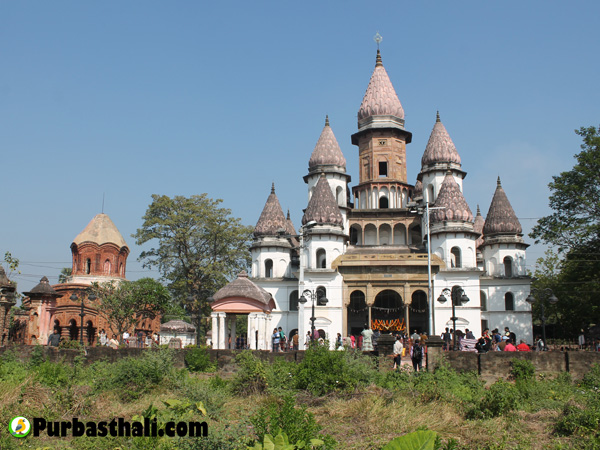
Hangseshwari Mandir
Built in 1814 AD, the Hangseshwari Temple has a unique structure consisting 13 minars or ratnas, each representing a blooming lotus bud. Dedicated to Goddess Hangseswari – as a form of Maa Kali in Hindu mythology, the construction of this temple building was initiated by Raja Nrisingha Deb Roy Mahasay and later completed by his widow wife Rani Sankari. The temple complex has another temple — Ananta Basudeba temple — besides the main temple. Built by Raja Rameswar Datta in 1679, this terracotta traditional eka-ratna style temple is noted for the exquisite carvings on its walls.
Distance: Around 74 kilometers from Kolkata.
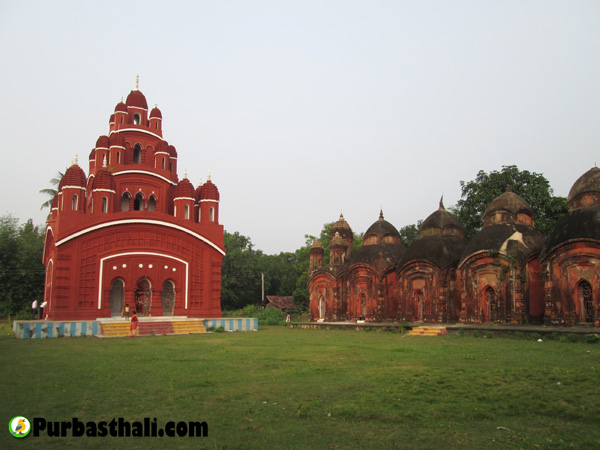
Somrabazar Temples
The Anandamoye Temple in nearby Sukharia Village of Somrabazar is one of the finest specimens of the 25-pinnacled terracotta temples in Bengal. Founded in 1763 AD, Anandamoyee Temple houses the main temple of Anandamoyee Maa, which is surrounded by 12 smaller temples. Although the present structure of the temple was completed in 1813 AD, few terracotta panels are still in good condition. The other notable temples of Somrabazar are Harasundrai Temple built in 1814 AD and Nistarini Temple built in 1847 AD. The Siddheshwari Kalibari Temple on the banks of the Ganges may not be structurally grand as the other temples of Somra bazar but its spiritual and historical importance is immense.
Distance: Around 50 kilometers from Kolkata.
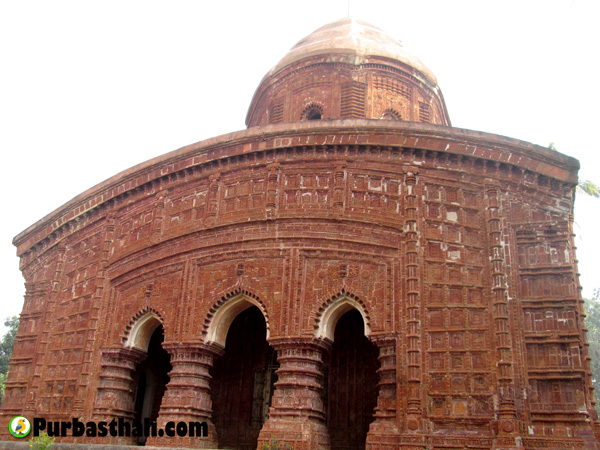
Guptipara Temples
The temple complex at Guptipara houses four great Vaishnava Temples – Chaitanya, Brindabanchandra, Ramchandra, and Krishnachandra. The Ekratna (single – pinnacled) Ramchandra Temples contain many terracotta works, while the 60-feet high Brindabanchandra Temple is not endowed by any intricate terracotta work but it surely dominates the skyline. All of the structures bear characteristics of the Bengal school of architecture, with carvings depicting scenes from the epics and Puranas.
Distance: Around 41 kms from Kolkata.
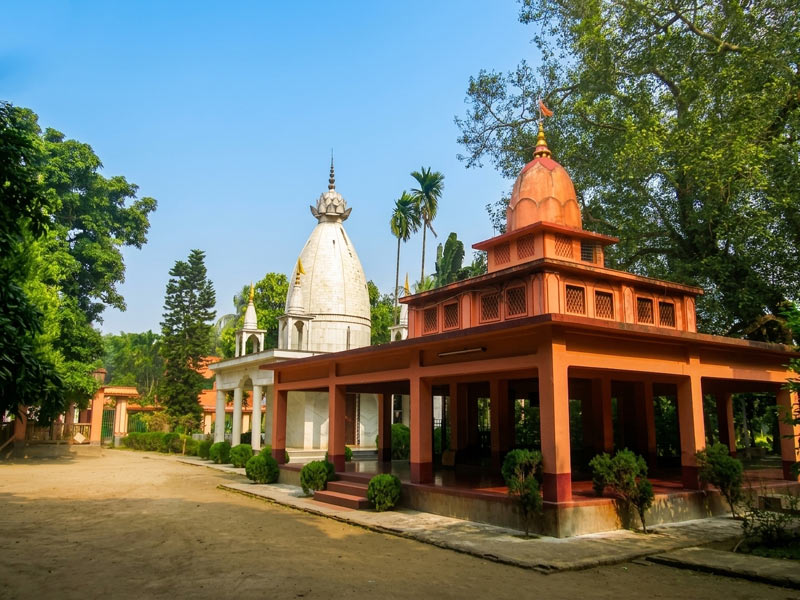
Bandel Church
One of the oldest churches of India, Bandel Church was founded in 1599 AD by the local Portuguese settlement. The church is dedicated to Nossa Senhora do Rosário, Our Lady of the Rosary. Around 1571 AD, Emperor Akbar allowed the Portuguese to settle in this part of Hooghly. Soon, the Portuguese settlement built a fort and in the following years a significant population of Catholic Christians settled in Bandel. However, the old church building has been plundered few times in the past five centuries. Presently, the church has several tombstones, an organ, three altars and a shrine to Mary. It also has a ship’s mast which was donated by the captain of a ship who steered through a fierce storm in Bay of Bengal. On November 25, 1988, Pope John Paul II declared the sanctuary a minor basilica.
Distance: Around ?? kilometers from Kolkata.
Hooghly Imambara
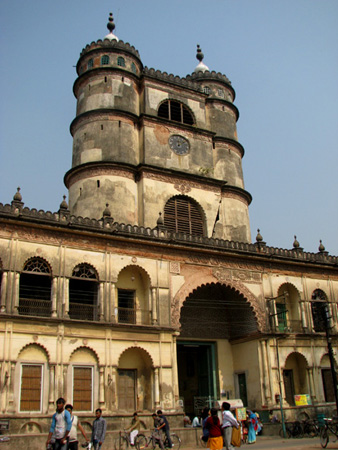
Built in 1861 by philanthropist Hazi Muhammad Mohsin, Hooghly Imambara is a mosque with a huge assembly hall. It is administered by the Shia astna-ashari sect of Muslims and is a very imposing 150 feet high structure on the banks of River Ganges. The two towers guarding the main doorway is connected by one of the largest clocks in India. This twin dialed clock was built by M/s Black & Hurray Co., Big Ben, London and came with price tag of Rs. 11721 in 1852 AD. There are three bells in the clock having a total weight of nearly 6000 kgs which ring every 15 minutes.
Distance: ?? kms from Kolkata.
Koblar Beel
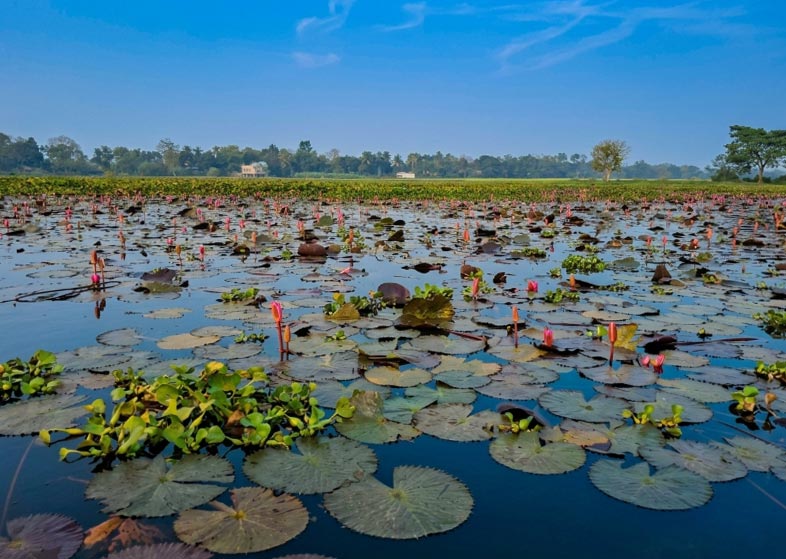
Koblar Beel (alternatively spelled as Koblaar Beel or Koblar Bil) is a ecologically significant oxbow lake and natural wetland spanning approximately 02 kilometers. Situated 04 kilometers from the historic temple town of Nabadwip, the lake has recently emerged as a prominent destination for low-impact ecotourism and conservation research. Like Purbasthali Lake, the wetland functions as a bird sanctuary, hosting diverse populations of both indigenous and migratory waterfowl. It serves as a vital breeding ground for specialized species, most notably the Pheasant-tailed Jacana, which nests within the floating macrophytic vegetation.
The unique topographical and vegetative conditions of the lake permit low-angle, unobstructed observation, making it a critical site for ornithological documentation and wildlife photography. The ecosystem is characterized by a high density of floating aquatic flora, dominated by various species of water lilies and lotuses. This dense vegetative canopy supports a complex, highly productive rural aquatic ecosystem, facilitating nutrient cycling and providing microhabitats that sustain local biodiversity.
Distance: 13 kms from Purbasthali.
Krishnanagar
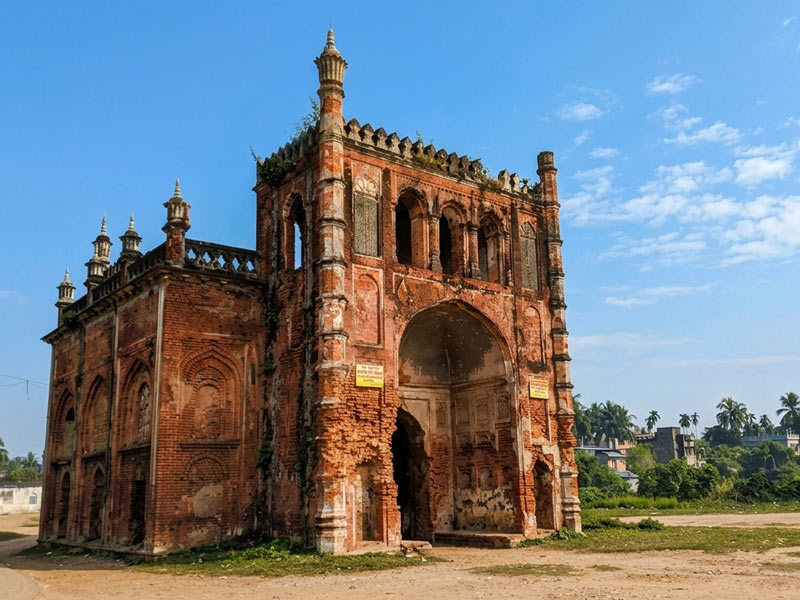
Krishnanagar, located on the southern banks of the Jalangi river was ruled by Raja Krishna Chandra Ray (1728 – 1782). Presently, the ruins of the Rajbari, its adjacent waterbody (Dighi) and the Durga Mandap are the main tourist attractions here. Few other attractions of Krishnanagar include Ghurni – the village of the famous doll makers and the Roman Catholic Church which hosts 27 oil paintings based on the life of Jesus Christ.
Distance: Around 30 kilometers from Purbasthali.
Nabadwip Dham
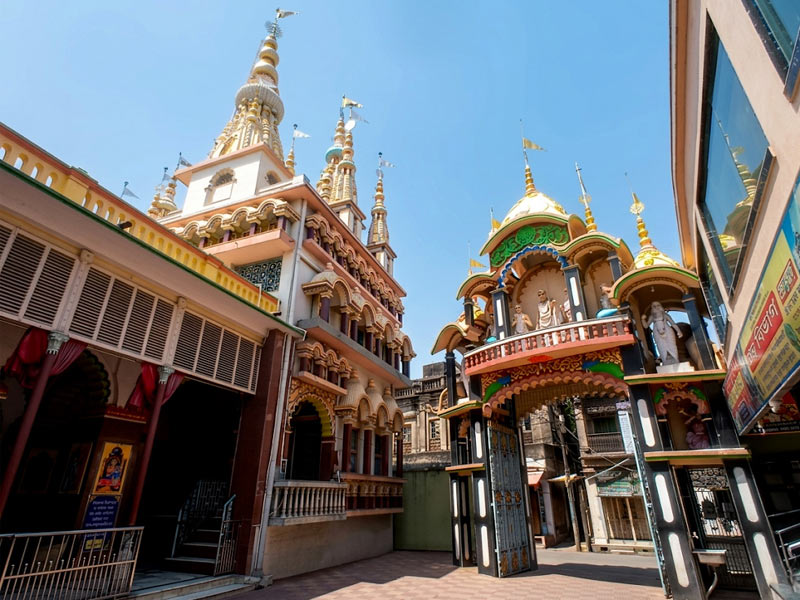
Nabadwip or the ‘new island’ served as the old capital of the Sena dynasty and is believed to have been founded in 1063 AD. It was a seat of learning in medieval India and is still revered for its “Tols” -traditional Sanskrit schools. The great social reformer and Vaishnava saint – Chaitanya Mahaprabhu (1486 AD to 1533 AD) and one of the most prominent figures of the Bhakti movement was born here. Nabadwip is an important center of pilgrimage for the Vaishnavas and Hindus world wide.
Distance: Around 13 kilometers from Purbasthali.
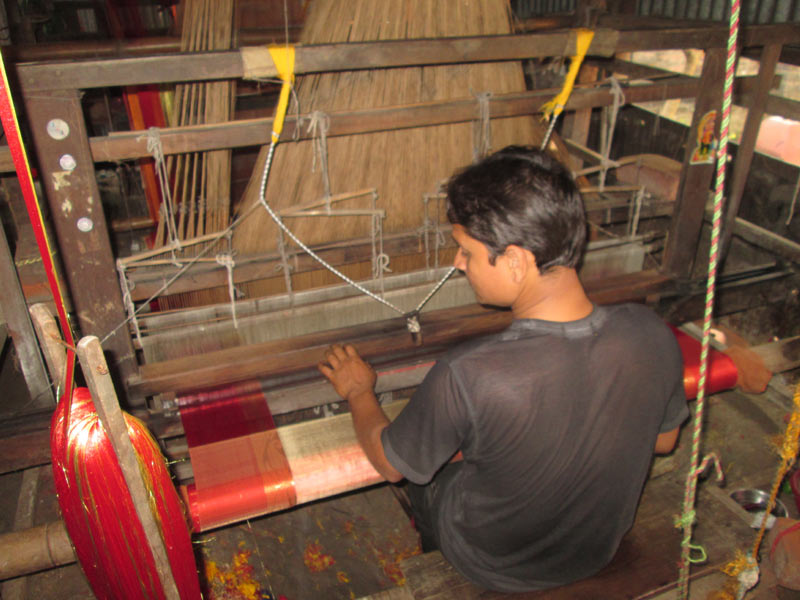
Samudragarh Handloom Workshops
Around 17 kms from our resort is the village of Samudragarh, where more than 10000 weavers design and weave some of the finest Tant (Handloom) sarees of India. There are Co-operatives which sell these finest quality handloom sarees to buyers. Most of it is sold to wholesalers located throughout India but individual buyers are also entertained nowadays. You can also visit the weavers home and workshpos and see them working on their looms and buy your favourite Jamdani, Tangail, Baluchari or Garad staright from the weaver.
Distance: Around 16 kilometers from Purbasthali.
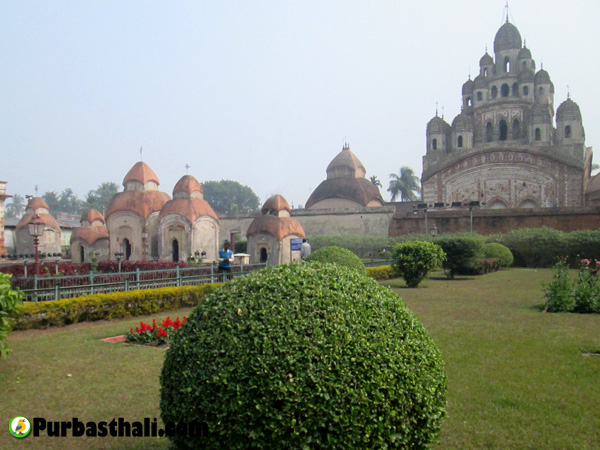
108 Shiv Mandir and other temples of Kalna
The temple town of Kalna or Ambika Kalna falls on the way to our resort. Some of the most distinctive and traditional temples of Bengal are located here with the most intricate terracotta carvings. If you are fond of temple architecture, then a visit to Rajbari Temple Complex of Kalna should be on your list. Among the many temples, the 108 Shi Mandir complex or Nava Kailash is the most popular. Built in 1809, these 108 temples were constructed in two circles. One consists of 74 temples while the other circle has 34. The other three temples famous for their terracotta carvings are Panchavimsatiratna (25 pinnacled) Lalji Mandir, Gopalbari and Krishnachandra Mandir. All these temples were built between 17th and mid 18th century by the Maharajas of Bardhaman..
Distance: Around ?? kilometers from Kolkata.

Want to book rooms. Get in touch now!
Address
Purbasthali Pakhiralay
Chupi-Kasthashali
Purba-Bardhaman, Pin - 713513
Phone/ WhatsApp
9073565723
(Mon-Sat, 11am to 7pm)